Private vs Public Preschool in Chicago: Hours, Calendar and Starting Age
Published: August 17, 2026 · Last updated: August 31, 2026
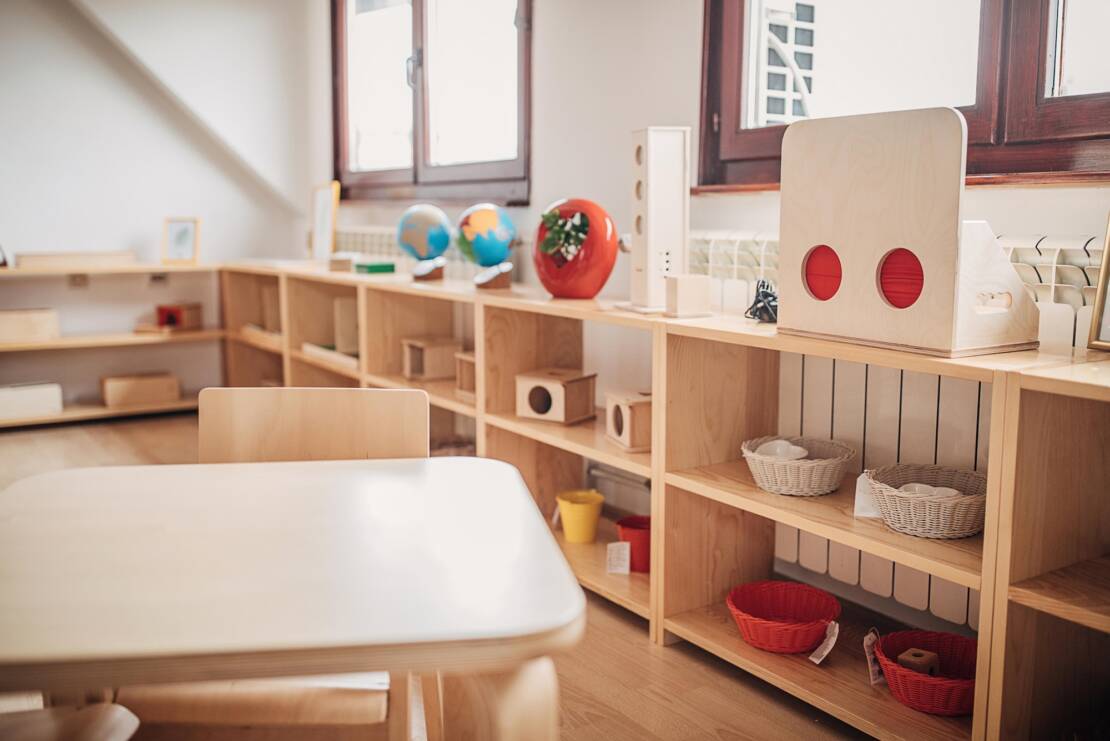
Public Pre-K is free and follows the school-year calendar, making it a strong choice for families who can manage shorter hours and school breaks. Private preschool costs more, but usually offers longer days, year-round care and earlier enrollment. The better fit depends on your child’s age, your working schedule, support needs, and budget.
Around your child’s third birthday, preschool stops being an abstract idea and turns into a decision you have to make. Two quite different options tend to be on the table at this point: programs run through your local school district, and privately run daycare centers. Both can be excellent choices, and when it comes to teaching quality, they are often far closer than parents expect.
Where they part ways is practical: how much of the day they cover, how many weeks of the year they are open, and how young a child they will take in. Cost comes into it, too, though it’s not the only thing that settles the question. Here is an honest comparison of both, with real numbers.
What’s the difference between private and public preschool?
Public preschool is funded by the state or your school district. It costs families nothing or very little, it’s taught by licensed early childhood teachers, and it runs on the school calendar. Private preschool, on the other hand, charges tuition, is licensed as a childcare center rather than run by the district, covers the full working day, stays open through the summer, and takes children long before their third birthday.
Neither is the ‘better’ option, generally speaking. A key difference is that one is built around a school year, while the other is built around a working year. And then another key difference is that one option is free, while the other charges tuition.
Private and public preschool side by side
| Public preschool | Private preschool | |
| Cost | Free, or based on household income | Tuition |
| Typical hours | 2.5 to 3 hours for a half-day session, or roughly 7 hours full-day | Up to 11 hours, for example 7am to 6pm |
| Calendar | The school year, around 176 days | Year-round |
| Youngest age accepted | 3, and often 4 for a full-day seat | From 6 weeks |
| Toilet trained? | Usually expected | Not required |
| How you enroll | An application window, then placement | Rolling, after a tour, with a waitlist |
| Teachers | Licensed, degree required | Varies by center |
| Special education services | Provided at no cost | Varies by center |
| Meals | Varies | Often included in tuition |
| Starting mid-year | Rarely possible | Usually possible |
Is public preschool really free?
Yes. In Chicago, for instance, every 4-year-old can apply for a free full-day pre-K place, and there are free half-day sessions for 3-year-olds, too, though far fewer of them.
Statewide, Preschool for All funds places for children ages 3 to 5, taught by teachers holding bachelor-level early childhood licenses. As of July 2026, it is run by the new Illinois Department of Early Childhood. Wherever you live, your own state’s early learning department runs an equivalent program under a different name.
So, the tuition line really is zero. The question worth asking is how much of your week that free place covers.
A free place that ends at lunchtime, or even at 3pm, isn’t the same thing as childcare. Illinois only requires Preschool for All programs to run 12.5 hours a week, which for most families amounts to roughly two and a half hours each morning. Chicago’s half-day sessions land in the same range. Even a full school day comes to about seven hours. If both parents work, that leaves afternoon care to arrange, possibly a second drop-off across town, and the whole of July and August to think about.
So, what does private preschool cost?
Across Illinois, private preschool tuition averages between about $11,000 and $12,500 a year, though that hides a wide range. A two-morning-a-week church program and a full-day center open 11 hours a day are priced completely differently, though both call themselves preschool.
Full-day centers are really priced as childcare with a curriculum attached, which is why their monthly figures look closer to daycare rates than to school tuition. We’ve broken those numbers down properly in our guide to how much daycare costs in Illinois, including what changes by age and by neighborhood.
Beyond the hours, tuition usually buys meals and snacks, care that doesn’t stop for school holidays, and the option to enroll two, three, or five days a week. At LadyBug & Friends, for example, meals are built into tuition and the $125 joining fee is listed openly on our tuition page.
How many days a year is public preschool open?
Public preschool runs on the school district calendar. In Chicago, that means the 2026-27 year starts on August 24, 2026 and ends on June 11, 2027. That’s 176 days when children are in school, plus 14 more when staff are in the building and children are not. Summer break runs 81 days, while spring break takes another week, March 22 to 26, 2027.
Now hold that against a working year. There are roughly 260 weekdays in 12 months. Take away the 176 school days, then take away the public holidays when most parents are off work anyway, and you are left with about 74 weekdays a year (close to 15 working weeks) when public preschool is shut and you are still expected at your desk.
Set out as hours of care across a full year, the gap is easier to see. Keep in mind that these are Chicago figures. Most states require about 180 school days, so the public rows shift a little depending on where you live.
| Days open a year | Hours a day | Hours of care a year | |
| Public half-day pre-K | About 176 | 2.5 to 3 | About 440 |
| Public full-day pre-K | About 176 | About 7 | About 1,232 |
| Private full-day center | About 250 | Up to 11 | About 2,700 |
Those 74 extra days don’t just vanish, unfortunately. Instead, they get filled with summer camps, grandparents, saved-up vacation days, a nanny or nanny-share, or one parent quietly dropping to four days a week. Some families absorb that comfortably, but plenty don’t, and it’s easier to plan for once you’ve seen the number.
Note: Public preschool is usually called pre-K in Chicago. Strictly, the term means the year before kindergarten, but CPS Pre-K takes both 3 and 4-year-olds, so the two words point to the same thing here.
Starting age, potty training and when your child can begin
This is where the two paths differ most sharply, and where the decision often gets made for you.
Age cutoffs
Public preschool is tied to age cutoffs, and districts usually set their own limits. In Chicago, a child counts as 4 if they turn 4 on or before September 1st. Children who are 3 by that same date can apply, but usually only for half-day sessions, and there are fewer of those than there are families who want them.
Private centers work differently. Licensed childcare takes babies from as young as 6 weeks, so there is no waiting for a birthday to fall on the right side of a date.
Potty training
Most public pre-K classrooms sit inside school buildings set up for children who can manage the bathroom on their own, so they generally expect children to be toilet trained before the first day. Policies vary from school to school, so ask yours directly rather than assuming either way.
Private centers change diapers as a matter of routine and treat potty learning as something staff help with, rather than a hurdle to clear before you’re allowed in.
When you can apply
Chicago’s applications for the 2026-27 year ran from April 7 to April 28, with placements announced in mid-May. You can apply later, and many families do, but the good places thin out fast, and you’re allowed to list two locations while only being offered one.
Private places open up as children move on rather than once a year. You call, book a tour, and start in February if that’s when you need to. However, for private centers, especially good ones, there is always a waitlist, so it’s better to start applying well ahead of time.
Teachers, class sizes and what gets taught
In a nutshell, public preschools have the edge on paper qualifications, while private centers have more freedom over how and what they teach.
Teacher qualifications
The teacher requirements on the public side are strict. Preschool for All classrooms are led by teachers holding bachelor-level early childhood licenses, working to a standards-aligned curriculum. Not every private center can match that on paper, and it’s a completely fair thing to ask about when you tour one.
What private centers offer instead is variety and continuity. They aren’t tied to district curriculum decisions, which is why you’ll find Montessori, Waldorf, Reggio Emilia and play-based programs sitting side by side in the same neighborhood, and why enrichment like music, Spanish, or creative movement is easier to build into the week.
Class sizes and ratios
Illinois licensing rules set the floor for private centers: one adult for every 10 children ages 3 and 4, tightening to one for every 4 for the youngest babies. Ask any center you visit what their real ratios are, since good ones often staff above the minimum.
Whichever way you lean, ask whether the National Association for the Education of Young Children has accredited the program. That badge carries the same weight in a district classroom as it does in a private one.
When public preschool is the better call
For plenty of families, public preschool is straightforwardly the right answer.
If you don’t need the full day covered, because you work part-time or from home, have a partner on a different shift, or have family nearby who can do a school-run pickup, then a free, well-taught, teacher-licensed program is difficult to argue with. The same goes if cost is the constraint that decides everything else.
If your child has additional needs, this is the strongest case of all. Children with an Individualized Education Program receive speech, occupational and developmental therapy through the public system at no cost, delivered in the classroom by specialists. Very few private centers can match that. There’s also real value in starting where they’ll go on to kindergarten, alongside their future classmates.
When private preschool is the better call
If both parents work standard hours with no local backup, the day and calendar figures above tend to make the decision on their own.
The same goes for families with a child under 3, since public preschool simply doesn’t start that early, and the case for starting daycare young is a strong one on its own.
It suits anyone who would rather not move their child between settings twice before they turn 5. There’s real value in one building, one set of teachers and one drop-off, right through from the baby room to the year before kindergarten. Children still working on the potty aren’t up against a deadline, and you can begin whenever a place becomes free rather than waiting for next April.
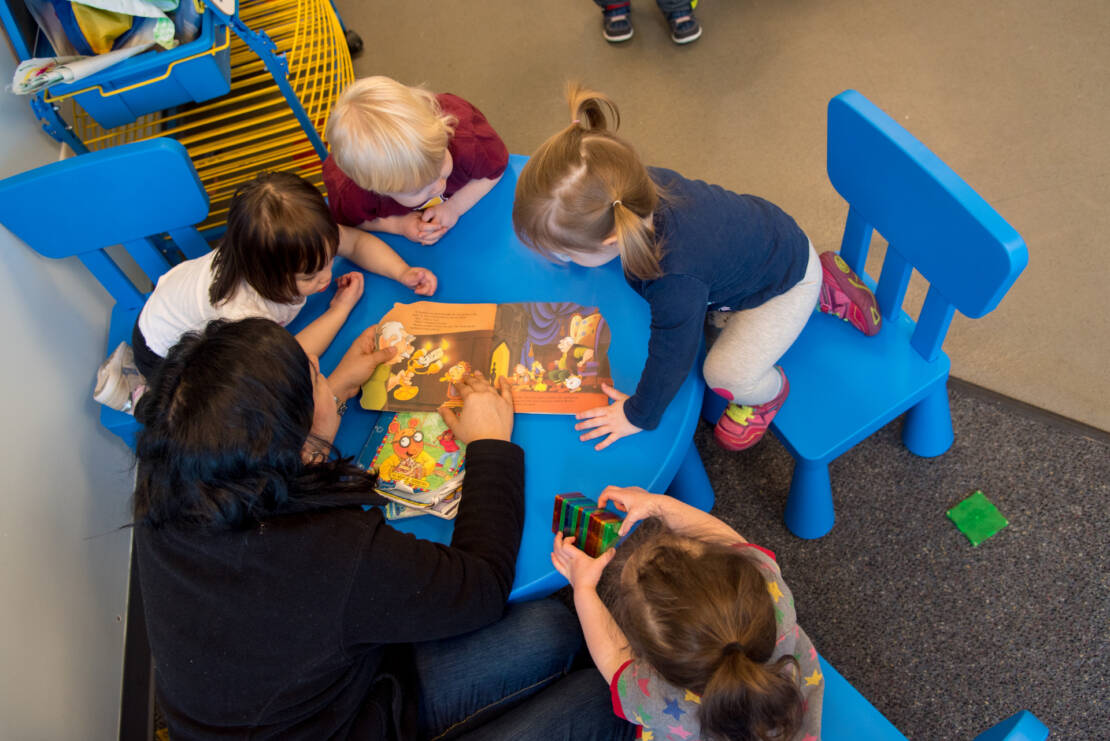
Sneak peek inside a LadyBug & Friends classroom
Five questions that will settle it
If you’re still torn, these tend to resolve it faster than any pros-and-cons list:
- How many hours a week do you really need covered? Not the hours you’d like. The hours between leaving the house and getting home.
- Who covers the 74 closed weekdays? Name the person or name the budget. If you can’t do either, that’s your answer.
- Will your child be toilet trained by the start date? If it’s going to be close, don’t build a plan that depends on it.
- Does your child need services an IEP would provide? If yes, look hard at the public option first.
- Would you rather move them once, or not at all? Continuity is worth more to some children than to others, and you know which yours is.
If your answers point to full-day, year-round care, that is what we do. LadyBug & Friends runs a daycare and a preschool in the same building at nine locations around Chicago and the suburbs, 7am to 6pm, for children from 6 weeks to age 6.
Book a tour and watch a room on an ordinary morning to see us in action.
Frequently asked questions
Is public preschool free?
Yes. State-funded and district-run places cost families nothing, and in Chicago free full-day pre-K is available to 4-year-olds, with fewer free half-day sessions for 3-year-olds. What it doesn’t cover is a full working day, or the roughly 74 weekdays a year when school is shut and most parents are still working, so many families pay for afternoon care or summer cover on top.
How much does private preschool cost?
In Illinois, private preschool tuition averages roughly $11,000 to $12,500 a year, but the range is wide. A part-week morning program costs a fraction of a center open 11 hours a day, year-round, with meals included. Full-day centers are priced much like daycare, so compare monthly figures rather than annual ones if you need full coverage.
Are private preschools better than public preschools?
Not inherently. Public programs are required to employ degree-holding licensed teachers and follow a standards-aligned curriculum, which is a high bar. Private centers offer longer hours, year-round care, younger starting ages and a wider choice of teaching approach. Judge the individual program rather than the category, and ask both about ratios, staff turnover and accreditation.
Does my child need to be potty trained for preschool?
For most public pre-K programs, yes, or close to it, because they sit inside school buildings set up for children who manage the bathroom independently. Requirements vary between schools, so check with yours. Licensed private centers change diapers as part of normal care and help with potty learning rather than requiring it up front, which is why parents of younger 3-year-olds often start there.
Can my child do public pre-K in the morning and daycare in the afternoon?
Some families make this work, and some centers offer part-day places designed for it. Be realistic about what it involves: two drop-offs, two sets of teachers, transport in the middle of the day, and two sets of closures to track. It can be a sensible way to combine a free place with the hours you need, and it’s also the point at which a fair few parents decide one building all day is worth paying for.
Get Enrollment Information and Register for our Tours & Waitlist…
Other News
Separation Anxiety at Daycare, When it Starts and When It Gets Easier
Separation anxiety usually starts around 9 months and returns in toddlerhood. Learn when t …What Age Does Preschool Start?
What age does preschool start? Typical ages from 2 to 5, what changes when a child turns 3 …How to Prepare Your Child for Daycare, Week by Week
How to prepare your child for daycare, week by week: Illinois health forms, moving naps an …What to Expect from Infant Care at Daycare: A Parent’s Guide
A complete guide to infant daycare in Chicago: ratios, daily routines, bottles and meals, …How Daycare Waitlists in Chicago Work and When to Apply, By Age
Daycare waitlists in Chicago run longest for the youngest children, since state ratios kee …Montessori vs Waldorf vs Reggio Emilia vs Play-Based, Explained
Montessori, Waldorf, Reggio or play-based? Compare the four preschool approaches, their ho …More News