Daycare Sick Policies: What Chicago Parents Should Know Before Cold and Flu Season
Published: November 10, 2026 · Last updated: November 19, 2026
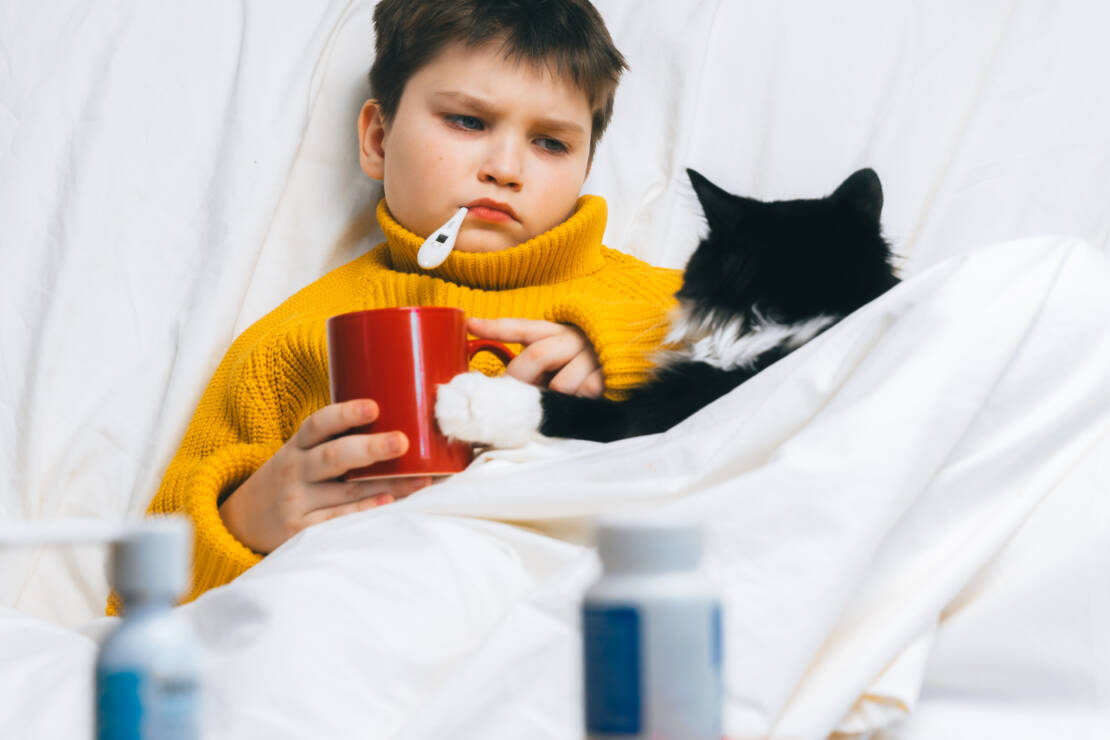
In Illinois, licensed daycare centers must exclude children with certain symptoms, including diarrhea, repeated vomiting, fever with other signs of illness, and specific contagious infections. A mild cold or runny nose usually doesn’t require staying home if the child feels well enough to participate. Return times vary by illness, and daycare centers may have stricter policies than the state’s minimum requirements.
Each winter brings on the same dilemma when you’re getting ready for daycare drop-off: should I worry about that runny nose or is my kid well enough to go in today? Some mornings, the answer is a clear no, like when there’s a fever or a stomach bug, but sometimes you’re not so sure. Maybe your toddler has been coughing all week, but is still eating and running around like normal, or that runny nose turned green without any other symptoms. What do you do?
Luckily, you don’t have to make it up as you go. Illinois licensing rules give every daycare center a list to work from, and your center’s sick policy is then built on top of it. In this guide, we’ll go through that list, see what temperature counts as a fever, how long each common illness keeps your child at home, and what to sort out before flu season hits.
What a daycare sick policy covers
Your daycare’s sick policy tells you when your child has to stay home and how long they need to be well before they can go back. It also explains what happens if your child starts feeling sick while they’re at daycare. Every licensed center in Illinois provides this, and you should get a copy when you enroll (if you didn’t, just ask for it).
Policies from different centers tend to look pretty similar, because the state sets the basic rules. Illinois requires teachers to check every child for obvious signs of illness when they arrive in the morning, and lists the illnesses that mean a child has to stay home. Each center then adds to that list, and plenty of them have a few rules of their own, like a specific temperature.
The Illinois rules behind every center’s sick policy
Every licensed daycare center in Illinois works from the same state rules on sick children. Here’s what Illinois’ licensing standards for daycare centers require:
- Teachers have to check each child for obvious signs of illness when they arrive at drop-off, and they decide whether they can safely care for that child that day.
- Minor illnesses don’t mean a child has to go home. Children only have to stay out when one of the conditions on the state’s list applies: a fever with a change in behavior or other symptoms, diarrhea, vomiting two or more times in 24 hours, or one of a short list of infections, such as pink eye with pus, strep throat, impetigo, head lice and chickenpox.
- Children who get sick during the day need a space to rest, with a cot, where an adult can see and hear them.
- Staff has to tell parents about any illness, write it down in the child’s file, and report any known or suspected contagious disease to the local health department.
That being said, your daycare can set tighter rules than the state, often around fever. So, always go by the written policy they give you.
What temperature counts as a fever at daycare?
Illinois doesn’t set one temperature for every fever. The state rule for keeping a child home is a fever that comes with a change in behavior or other symptoms of illness. The only numbers in the rule are for a rash with fever: 101 degrees or higher by mouth, or 100 degrees or higher under the arm.
The American Academy of Pediatrics (AAP) sees it in a similar way. For child care, it counts a temperature above 101 degrees as a fever, no matter how it’s taken, and it recommends keeping a child home when it comes with a change in behavior or other signs of illness.
Plenty of daycare centers write a lower number into their own policy, usually 100.4 degrees, and send a child home once their temperature hits it, even if your little one seems perfectly fine. Ask your center what number they go by and how teachers take the temperature. Readings under the arm tend to come out lower than readings by mouth, and forehead scanners can give you a different number again.
Babies under 2 months old are a different story. The AAP says to get urgent medical advice for a temperature above 100.4 degrees at that age, so call your pediatrician first and think about daycare later.
When to keep your child home from daycare
The table below shows the illnesses on the Illinois list and when your child can go back. Where the state rule doesn’t give a return time, we’ve used the AAP guidance or marked it as something to ask your daycare.
| Symptom or illness | Stay home? | When your child can go back |
| Fever with a change in behavior or other symptoms | Yes | After 24 hours with no fever, without fever-reducing medicine (AAP) |
| Vomiting two or more times in 24 hours | Yes, unless a doctor says it isn’t contagious and there’s no risk of dehydration | Illinois doesn’t set a time. Ask your center |
| Diarrhea | Yes | Illinois doesn’t set a time. Ask your center |
| Rash with fever or a change in behavior | Yes | When a doctor says it isn’t contagious |
| Pink eye with pus | Yes | 24 hours after treatment starts |
| Strep throat | Yes | At least 24 hours after treatment begins and 24 hours fever-free, as required by Illinois rules. |
| Impetigo | Yes | 24 hours after treatment starts |
| Head lice or scabies | Yes | The morning after the first treatment |
| Mouth sores with drooling, which can happen with hand, foot and mouth disease | Yes | When your doctor or the health department says it isn’t contagious |
| Chickenpox | Yes | At least six days after the rash appears |
| Flu, RSV or croup with fever | Yes | After 24 hours with no fever, without fever-reducing medicine (AAP) |
| Cold, cough or runny nose with no fever | No | Your child can stay |
Illinois also sets longer waiting periods for whooping cough, mumps, and measles. If your child has one of these, your doctor and the health department will tell you when they can go back.
And for two common ones, pink eye and strep throat, Illinois keeps kids home longer than the national advice. Under the state rules, a child with pink eye that has pus stays home until 24 hours after treatment starts, while the AAP doesn’t ask for any time off for pink eye without a fever. With strep, Illinois wants 24 hours of antibiotics and no fever, and the AAP says 12 hours. So if you read a national guide and expected your child to go back sooner, that’s why your daycare might tell you something different.
When a cold, cough or runny nose is fine for daycare
Good news: your child can go to daycare with a cold in Illinois, as long as there’s no fever and they can join in the daily activities. The state rule says a minor illness isn’t a reason to keep a child out, and the AAP lists a few common complaints that don’t need a day at home:
- Runny noses, whatever the color
- Coughs with no fever
- Ear infections, if your child is acting like their usual self
- Rashes with no fever and no change in behavior
- Hand, foot and mouth disease without a fever or drooling mouth sores
Basically, the state and the AAP come back to the same question: does your child feel well enough to go to daycare? If your toddler has a stuffy nose but is eating, playing and napping like they always do, they’re fine to go. If they’re too tired to play, want to be held all day or are having trouble breathing, keep them home and call your pediatrician, whatever the thermometer says. Keep in mind that in Illinois, one teacher can look after up to four babies or eight 2-year-olds, so a child who needs cuddles all day will be much happier at home with you.
What happens if your child gets sick at daycare?
If your child starts to look or feel unwell during the day, the teacher will take their temperature and watch for the symptoms on the center’s list. If they need to go home, they’ll rest in a quiet spot away from the other kids, on a cot, with a teacher close enough to see and hear them. Then the center calls you to come and pick them up.
When you enroll, ask how quickly you’re expected to get there, and give the center a second and third phone number just in case they can’t reach you. Under Illinois rules, if a child ever needs emergency care and the center can’t reach the parents, it has to write down every call it tried in the child’s file, so keep those numbers up to date.
The illness also goes in your child’s record. If it’s contagious, the center has to report it to the local health department, and they may let the other families in the room know, too, without naming your child. At our centers, you’ll also get pictures and daily updates through our parent app, so you can see how your child has been eating and sleeping before you ever get that call.
When your child can go back to daycare after a fever
The usual rule is 24 hours with no fever and no fever-reducing medicine. That means no children’s Tylenol or Motrin during those 24 hours, as both bring a temperature down for a few hours without treating whatever is causing it. If your child has a dose at 7am, their temperature might look normal at drop-off and then go back up by lunchtime, and you’ll get a call from daycare to come and get them.
Here’s how it works in real life: if your child’s fever goes away on Sunday evening without any medicine, they can usually go back to daycare on Tuesday morning. They should also be eating, drinking, playing and acting like themselves again.
For some illnesses, you’ll need a doctor to give the OK first. In Illinois, a child with a rash and fever needs a doctor to confirm it isn’t contagious, and a child with mouth sores and drooling needs the same from a doctor or the health department. Some centers also ask for a doctor’s note after strep or pink eye, so check your center’s policy before the appointment and ask for a note while you’re there.
How to prepare for cold and flu season at daycare
According to the CDC, flu activity usually peaks between December and February. Here’s what you can get sorted in November, before it starts:
- Ask your center for its written sick policy and save a photo of it on your phone.
- Agree on who’ll do pickup on a sick day, and who’ll stay home with your child the day after.
- Sign any medicine forms now, so teachers can give prescribed medicine without delay. Our guide on what to pack for daycare covers the forms and the labeling rules.
- Keep a full change of clothes in the cubby, socks included.
- Ask your pediatrician which seasonal vaccines your child is due for.
If your little one is in their first year of group care, you’ll probably see more colds than you’re used to. Our guide to the benefits of daycare explains why that happens and how it tends to settle down, and if your child hasn’t started yet, our week-by-week guide to preparing for daycare covers that first month.
At LadyBug & Friends, our nine centers in Chicago and the suburbs take babies from 6 weeks old through age 6, with doors open from 7am until 6pm. Ask for our health policy when you visit, and we’ll walk you through what happens on a sick day, from the morning check to the moment we call you. Schedule a tour at the center that works for you.
Frequently asked questions
How sick is too sick for daycare?
Keep your child home if they have a fever along with a change in behavior or other symptoms, if they’ve thrown up two or more times in 24 hours, if they have diarrhea, or if they just aren’t well enough to join in with play and meals. Colds, coughs with no fever and runny noses are usually fine. Check your center’s written policy, too, since plenty are stricter than the state.
What temperature is too high for daycare?
Illinois rules don’t set a single number. Instead, they keep a child home for a fever that comes with other symptoms or a change in behavior. The AAP uses 101 degrees for child care, and lots of centers send children home at 100.4 degrees. Ask your center which number it goes by and how teachers take the temperature, since different thermometers give different readings.
How long after a fever can my child go back to daycare?
Your child can usually go back after 24 hours with no fever, without children’s Tylenol, Motrin or any other fever-reducing medicine in that time. They should also be eating, drinking and acting like themselves again. If the fever came from strep, Illinois also asks for 24 hours of antibiotics, and some centers want a doctor’s note after certain illnesses.
Can my child go to daycare with a cough but no fever?
Usually, yes. Illinois rules don’t make a child with a minor illness stay home, and the AAP lists a cough without fever as fine for child care. But keep your child home if the cough makes it hard for them to breathe, stops them from joining in or comes with a fever, and call your pediatrician if you’re not sure.
Can my child go to daycare with pink eye?
In Illinois, a child with pink eye that has pus has to stay home until 24 hours after treatment starts. That’s stricter than the AAP’s national advice, which lets children with pink eye and no fever go to child care. If the eye is just red or watery with no pus, check with your center, and call your pediatrician to find out which kind it is.
Does my child need a doctor’s note to return to daycare?
Not for every illness. Illinois requires medical clearance in certain circumstances, such as a rash with fever or mouth sores with uncontrolled drooling. Other documentation requirements depend on the illness and the daycare’s written policy.
Do you still pay for daycare when your child is sick?
Usually, yes. Daycare tuition holds your child’s place in the room, and centers tend to charge the same amount whether your child comes in or spends the day on the couch with a fever. At LadyBug & Friends, sick days are included in your weekly tuition, so nothing changes on your bill. Check your contract for your own center’s rules.
Get Enrollment Information and Register for our Tours & Waitlist…
Other News
How a Dependent Care FSA Works for Daycare
Pay for daycare with pre-tax money. How a dependent care FSA works, the new limit for 2026 …The 6 Stages of Play: How Children Learn to Play Together at Daycare
The 6 stages of play, from playing alone to playing together. See what parallel, associati …Is Pre-K the Same as Preschool? What’s the Difference in Illinois?
Confused by preschool and pre-K? Compare ages, Chicago enrollment cutoffs, and classroom e …Separation Anxiety at Daycare, When it Starts and When It Gets Easier
Separation anxiety usually starts around 9 months and returns in toddlerhood. Learn when t …What Age Does Preschool Start?
What age does preschool start? Typical ages from 2 to 5, what changes when a child turns 3 …How to Prepare Your Child for Daycare, Week by Week
How to prepare your child for daycare, week by week: Illinois health forms, moving naps an …More News